
Department of Clinical Tropical Medicine
Just another Faculty of Tropical Medicine Sites site
Mass Spectrometry (MS) is an analytical technique which be used for measuring the mass-to-chare ratio (m/z) of one or more molecules present in a sample. The principle of MS is to generate multiple ions from the sample, then to separate them according to their specific mass-to-charge ratio (m/z), and to record the relative abundance of each ion type. MS can be used to calculate molecular weight of the sample components. Furthermore, MS can be used to identify unknown compounds by molecular weight determination, to quantify known compounds, and to determine structure and chemical properties of molecules (1).
MS instrument consists of three major components:
Finally, mass spectrum of the molecule is generated and showed in the form of ion abundance (%) versus m/z plot (1).
In severe falciparum malaria, acidosis and acute kidney injury (AKI) are independent predictors of a fatal outcome in all age groups. The relationship between plasma acids, urine acids and renal function was investigated in adult patients with severe falciparum malaria. Clinical mass spectroscopy approach was developed, validated and utilized for quantification of eight small organic acids; l-lactic acid (LA), alpha-hydroxybutyric acid (aHBA), beta-hydroxybutyric acid (bHBA), p-hydroxyphenyllactic acid (pHPLA), malonic acid (MA), methylmalonic acid (MMA), ethylmalonic acid (EMA) and alpha-ketoglutaric acid (aKGA). These organic acids were analyzed simultaneously and showed increased concentrations in proportion to disease severity (2). Principal component analysis, including four plasma acids (LA, aHBA, bHBA and pHPLA) and seven urinary acids (LA, aHBA, bHBA, MMA, EMA, aKGA and pHPLA) separated a group of patients with AKI, which was mainly driven by pHPLA concentrations. Both plasma and urine concentrations of pHPLA closely correlate with AKI in patients with severe falciparum malaria (3). Further studies will need to assess the potential nephrotoxic properties of pHPLA.
References:
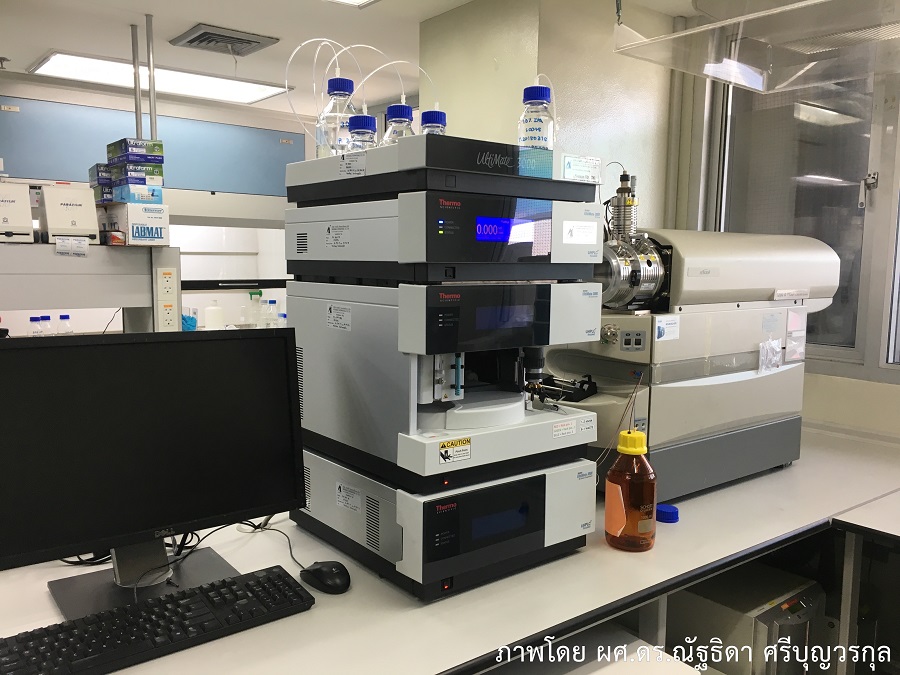
ภาควิชาอายุรศาสตร์เขตร้อน คณะเวชศาสตร์เขตร้อน มหาวิทยาลัยมหิดล