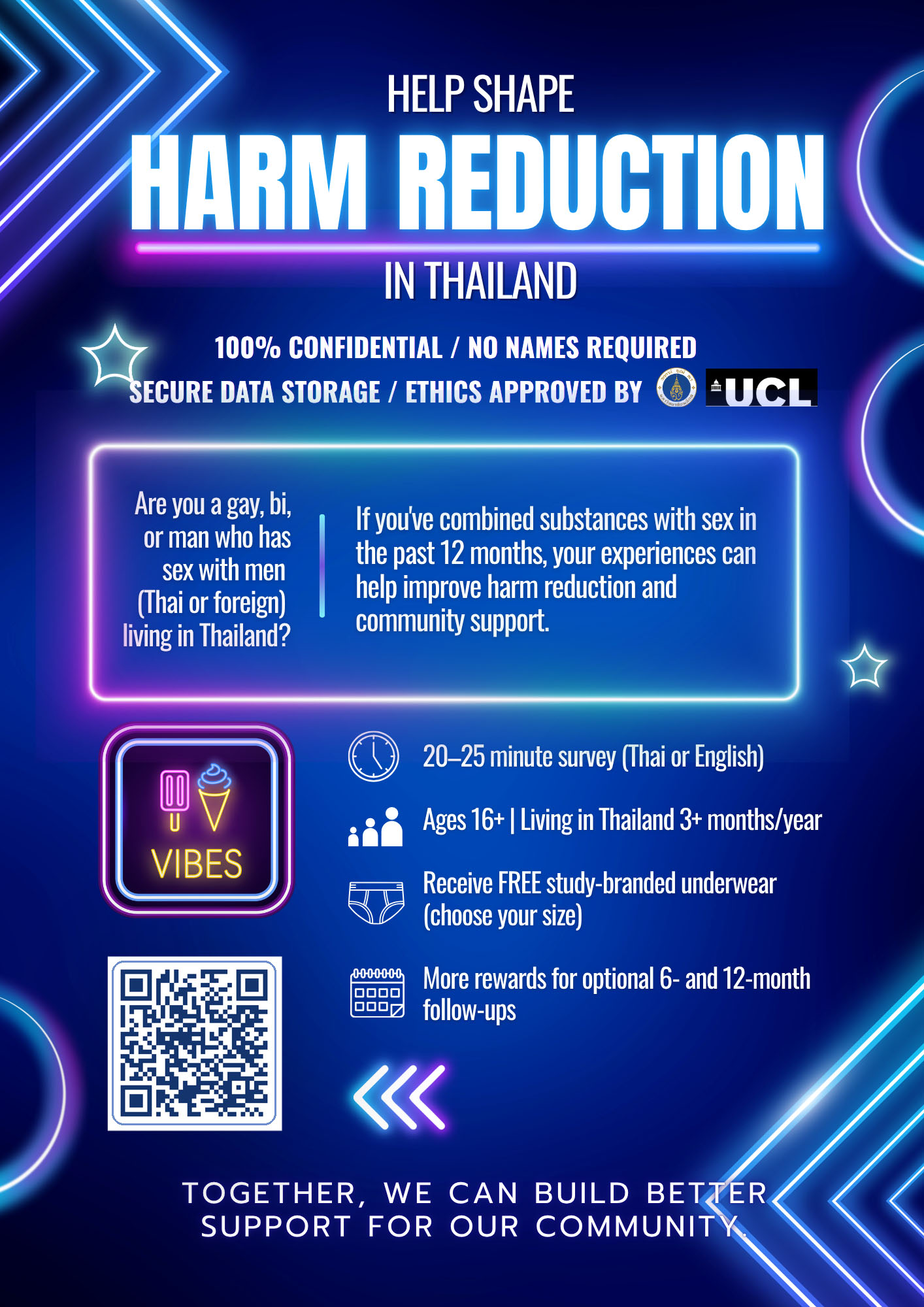
สรุปย่อโครงการ
มีเกย์ ไบเซกช่วล และชายที่มีเพศสัมพันธ์กับชายอื่น (GBMSM) บางคนที่ใช้สารเสพติดร่วมกับการมีเพศสัมพันธ์เพื่อเสริมอารมณ์และความแนบแน่นระหว่างกัน ในประเทศไทย กิจกรรมนี้รู้จักกันในชื่อ “hi-fun” เมื่อยาม้า (crystal methamphetamine) เป็นสารเสพติดที่ใช้ในกิจกรรม แม้ว่าจะมีหลายคนที่ใช้สารตัวอื่นในวิธีที่ต่างกันระหว่างมีเพศสัมพันธ์ก็ตาม แม้ว่ามันจะสามารถสร้างความสุขและความสัมพันธ์ได้ แต่ hi-fun ก็ยังสามารถก่อผลร้าย เช่น ปัญหาสุขภาพจิต ปัญหาในความสัมพันธ์และการงาน และความเสี่ยงต่อการติดเชื้อ HIV และเชื้ออื่น ๆ กฎหมายการปราบปรามสารเสพติดที่เข้มงวดในประเทศไทยยังกระทบต่อผู้ใช้สารและเพิ่มความเสี่ยงถูกจับและรีดไถจากตำรวจ
งานวิจัยชุดก่อนหน้าของเราได้พัฒนานิยามเฉพาะพื้นที่ของประเทศไทยไว้เป็นครั้งแรก โดยแยกประเภทการใช้สารนี้ออกจากการใช้สารเสพติดในบริบททางเพศรูปแบบอื่น เช่น การมีเพศสัมพันธ์ในบ้านหรือ “homepa” (ปาร์ตี้กางเกงในในพื้นที่ส่วนตัว ซึ่งมีส่วนเกี่ยวข้องกับกิจกรรมกลางคืนในกลุ่มเควียร์อย่างมาก) หรือการมีเพศสัมพันธ์อย่างไม่ได้ตั้งใจระหว่างการใช้สาร การทบทวนวรรณกรรมงานวิจัยที่ผ่านมาทำให้เห็นช่องว่างในที่สำคัญในการช่วยเหลือผู้ใช้สารในเอเชียตะวันออกเฉียงใต้ งานศึกษา VIBES จึงมีวัตถุประสงค์เพื่อสร้างความเข้าใจเกี่ยวกับรูปแบบการใช้สารในกลุ่มชายที่มีเพศสัมพันธ์กับชายอื่นในประเทศไทย ว่ารูปแบบเหล่านั้นมีการเปลี่ยนแปลงตามเวลาอย่างไร อันตรายที่ผู้ใช้สารต้องเผชิญ และอิทธิพลรอบข้างที่ส่งผลต่อประสบการณ์ของผู้ใช้สาร โดยตั้งต้นจากข้อค้บพบก่อนหน้านี้เป็นพื้นฐานการศึกษา
VIBES เป็นชื่อย่อของชื่อโครงการเต็ม และสะท้อนคำศัพท์ที่ถูกใช้กันภายในกลุ่ม GBMSM ชื่อโครงการ VIBES ยังเป็นแบรนด์โครงการวิจัยหลายองค์ประกอบรวมกัน เพื่อให้การรับรู้และมีส่วนร่วมกับโครงการง่ายขึ้น ของจากแบรนด์ VIBES จะถูกใช้ในการสร้างการมีส่วนร่วมและผู้อื่นนอกจากผู้เข้าร่วมการวิจัยก็สามารถใช้ได้เช่นกัน
โครงการศึกษานี้เปิดให้ GBMSM ที่อายุ 16 ปีขึ้นไป เนื่องจาก GBMSM อายุน้อยที่ใช้สารเสพติดในบริบททางเพศเป็นกลุ่มที่ต้องการการช่วยเหลือแต่เรากลับมีความเข้าใจพฤติกรรมของพวกเขาน้อยเกินไป การกีดกัน GBMSM อายุน้อยกลุ่มนี้เสี่ยงต่อการกีดกันประชากรที่ไม่ถูกพูดถึงในการศึกษาออกไปอีกUniversity College London เป็นผู้สนับสนุนโครงการหลัก และรับผิดชอบการดูแลโครงการและการจัดการข้อมูลของโครงการ
งานศึกษาประกอบด้วยสองส่วน ส่วนแรกคือแบบสำรวจผู้ใช้สารในประเทศไทย และติดตามพวกเขาเมื่อเวลาผ่านไปเพื่อสังเกตการเปลี่ยนแปลงที่เกิดขึ้น เราใช้เทคนิคการวิเคราะห์ทางสถิติชื่อ Latent Class Analysis เพื่อจำแนกกลุ่มผู้ใช้สารที่แตกต่างกันตามรูปแบบการใช้สารและพฤติกรรมทางเพศ การแบ่งประเภทนี้จะช่วยใช้เรารู้ว่าผู้ใช้สารกลุ่มใดประสบปัญหาแบบใด และแต่ละกลุ่มต้องการความช่วยเหลือแบบใดบ้าง อีกส่วนคือการสัมภาษณ์และการเก็บบันทึกจากผู้ใช้สารในแต่ละกลุ่ม การวิจัยส่วนนี้จะช่วยให้เราเข้าใจอิทธิพลรอบข้าง ทั้งโลกาภิวัตน์ การย้ายถิ่นฐาน ความเหลื่อมล้ำ การทำให้สารเสพติดเป็นสิ่งผิดกฎหมาย และการตามหาสุข มีส่วนประกอบประสบการณ์และชีวิตของชายผู้ใช้สารร่วมในการมีเพศสัมพันธ์อย่างไรบ้าง
เราทำงานอย่างใกล้ชิดกับองค์กรชุมชนและผู้ใช้สารที่มีประสบการณ์ตรงตลอดทั้งการศึกษา ข้อค้บพบจากการวิจัยจะถูกเผยแพร่ในการตีพิมพ์เชิงวิชาการ งานประชุม กิจกรรมชุมชนและวิดีโอสั้น เพื่อเป้าหมายการสื่อสารให้ความช่วยเหลือผู้ใช้สารในบริบททางเพศในประเทศไทยและพื้นที่อื่น
PROJECT SUMMARY
Some gay, bisexual and other men who have sex with men combine drugs with sex to enhance pleasure and intimacy. In Thailand, this practice is known as ‘hi-fun’ when it involves a drug called crystal methamphetamine, though men also combine sex with other drugs in different ways. While hi-fun can bring pleasure and connection, it can also lead to harms including mental health difficulties, problems with relationships and work, and increased risk of HIV and other infections. Thailand’s strict drug laws mean that men who engage in these practices face additional risks from police, including arrest and extortion.
Our earlier research developed the first local definition of hi-fun in Thailand, distinguishing it from other types of sexualised drug use such as sex at home ‘homepas’ (underwear parties in private spaces which are strongly linked to the queer nightlife scene) and incidental sex with drugs. A literature review of existing research also revealed significant gaps in what we know about effective support for men engaged in sexualised drug use in Southeast Asia. Building on this foundation, the VIBES study aims to understand the different patterns of sexualised drug use among men who have sex with men in Thailand, how these patterns change over time, what harms men face, and what wider forces shape their experiences.
VIBES is an acronym derived from the full study title and reflects terminology used within GBMSM communities. VIBES also functions as the study’s multi-component research brand, supporting engagement and study recognition. VIBES-branded materials are used for engagement purposes and are not limited to study participants.
The study includes GBMSM aged 16 and above. This is because younger GBMSM who engage in sexualised drug use represent a group with intervention needs whose behaviour is poorly understood. Excluding this group would risk further marginalising an already underrepresented population in research. University College London is the project sponsor and has responsibility for study oversight as well as data management.
The study has two main parts. First, we will conduct a survey with men across Thailand, and follow them over time to identify any changes over time. We will use a statistical analysis technique called latent class analysis to identify distinct groups of men based on their patterns of drug use and sexual behaviour. This will help us understand who experiences which types of harms and what support services men prefer to address these. Second, we will conduct in-depth interviews and collect diary entries from men across these different groups. This will help us understand how broader forces—including globalisation, migration, inequality, criminalisation and the pursuit of pleasure—shape the lives and experiences of men who combine sex with drugs.
We will work closely with community organisations and men with lived experience throughout the study. Findings will be shared through academic publications, conferences, community events and short videos, with the goal of informing better support for men engaged in sexualised drug use in Thailand and the wider region.